


WP3 - Reliability of Urban Flood Defences


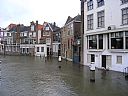

The recent and dramatic floods of the last years in Europe (Windstorm Xynthia in France, February 2010, floods in South of France, 2002 and 2003, historical floods in Central Europe, Summer 2005), United-States (Hurricane Katrina, August 2005) and Asia (Thailand, 2011) have shown the vulnerability of flood defence systems composed of man-made structures (as levees, walls, etc.) and natural structures (as dunes, etc.). The first key point for avoiding these dramatic damages and the high cost of a failure and its consequences lies in the knowledge of the safety level of the protection system. Identifying weak points of the system is the most important but the most difficult issue.
Most of the levees are old structures, built several centuries ago, then rebuilt or repaired (after a breach), modified, heightened several times, with some materials that do not necessarily match the original conception of the structure. The levee foundations are also heterogeneous and in general were not properly treated to improve their water-tightness or other fundamental properties. Other factors introduce weaknesses in a levee: (i) trees, roots, burrows or termite nests could modify the structure of the levee and reduce its mechanical properties; (ii) particular geological formations and their evolution could also threaten the dike, as it occurred in the city of Orléans, France, where levees have collapsed in karstic areas. In urban context, the levees present many other singularities, such as embedded networks, pipes, human constructions like houses and walls. Due to all these factors, levees have to be considered as heterogeneous structures. Considering the stretch of hundreds of kilometres and the heterogeneity of the levees, both good assessment methods, based on sturdy fundamental knowledge of the failure mechanisms and the strength of the levee components, and rapid, cost-effective and reliable techniques for data acquisition and surveying the defence system are necessary.
FloodProBE work package 3 relates to the question of assessing earthen levees safety, more specifically in urban area. Task 3.1 actions deal with fundamental knowledge about the failure mechanisms or resistance of the dike. Task 3.2 actions deal with rapid, cost-effective investigation techniques. Task 3.3 deals with the question of the assessment methodology itself.
An assessment is a process that has the objective to evaluate the performance of a levee system relating to one of its main functions: to protect against a given natural event and to be stable/safe. A complete assessment should include a diagnosis of the actual or possible causes of failure, in order to remediate or prevent them.
The assessment process can be described, in a very simple way, as the use of one or more methods of treating and combining data in order to obtain an evaluation of the performance of the levee system, according to its main function (protect against flood) and/or its reliability (against the possible failure modes). This can be done in different ways, as there are different assessment methods used in different countries, all based on a combination of data processing, using expert judgment, index based methods, empirical models, physical and/or mathematical models.
Assessment make use of a lot of data. Some are already available at the start of an assessment process, while other ones are needed but unavailable; so specific data gathering has to be made during the assessment process. These data gathering can be done during specific inspections and investigations. And all data has its place in the information system of the levee manager.
Task 3.1: Performance characterisation of urban flood defences and the performance of vegetation
during flooding

Task 1 of work package 3 deals with improving fundamental knowledge of:
- mechanisms leading to failure of an earthen work (internal erosion, 3.1.1)
- structural weaknesses and associated failure modes (structure transitions, 3.1.2)
- performance of the levee (resistance to external erosion brought by vegetation, 3.1.3)
which are essential for understanding the possible failure modes of the levee.
Task 3.2: Rapid and cost-effective dike condition assessment methods
Task 2 of work package 3 deals with rapid and cost-effective investigation techniques:
- geophysics, to complement classical geotechnical investigations and tests,
- LiDAR to get a high quantity of topographic information as well as high resolution pictures and videos.
which are essential data to be used during an assessment process.
This report refers to the question of getting data to be used in assessing earthen levees safety. The first part briefly presents a synthesis of the global approach related to diagnosis. The second part focuses on the contribution of geophysical methods; guidelines are issued from the conclusions of an International Workshop on Geophysics held in Paris in March 2011. The third part is dedicated to remote sensing and more specifically to the helicopter borne LiDAR (Light Detection and Ranging) technology, which provides extremely accurate topographic and imagery data at a highly efficient rate and that was tested on “Val d’Orléans” Pilot Site in the framework of FloodProBE, with the financial support of two structures managing organisations (DREAL Centre and SNCF) an of an industrial partner (Fugro-Geoid).
Task 3.3: Combination of information sources for dike diagnosis
Task 3 of the work package 3 details the general assessment framework developed during the project, as well as presents different examples of assessment methods and the way they can be improved using the developed framework.