


Recent Posts
- In the Press - 07/01/2015
- Flood Protection Measures for The Capital City of Prague - 05/02/2014
- Press Release - 27/09/2013
- International Conference on Flood Resilience - 25/01/2013
- Join us at the FLOODrisk 2012 Science-Policy-Interfacing special sessions - 14/11/2012
Archived News


In the News
Historical floods - Hamburg - 12 November 2010
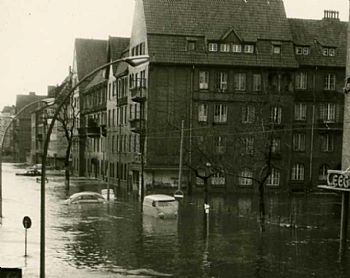
Storm and flooding - Hamburg 1962
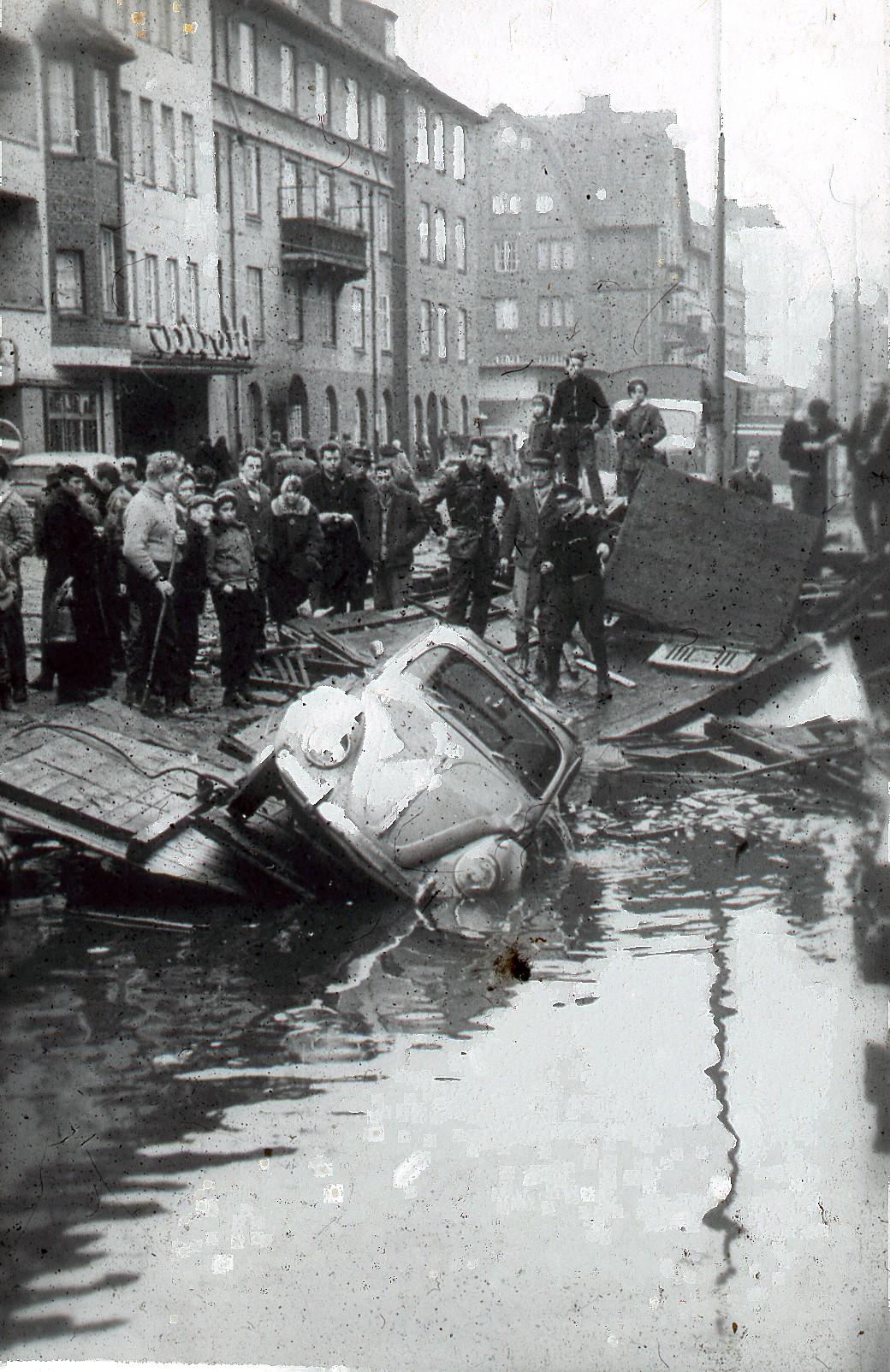
The 1962 floods in Northern Germany were a natural disaster that resulted in a lot of damage and 340 deaths. On the night of 16-17 February, a storm with wind speeds up to 200 km/hr swept across the North Sea. The resulting storm surge, in combination with increased river discharges from heavy rains, led to a water level rise of more than 3 meters and breach of the flood defences along the rivers Elbe and Weser. In the city of Hamburg, flooding caused direct damage to 6000 buildings in an area of 20 km2, mainly in the Wilhelmsburg district, where 315 deaths occurred. Advance storm warnings were only issued via the radio. During the night, large disruptions in communication systems prevented coordinated emergency response actions. But through his personal contacts with NATO and the German armed forces, Helmut Schmidt (who later became Chancellor of Germany), could start the first rescue attempts on the morning of 17 February.
The total damage amounted to € 350 million.
In the city of Bremen, flood defences were damaged, but to a lesser extent and due to early warnings and timely evacuations, only 7 people died.
In both cities, some areas were declared unfit for habitation, based on the flood risks. The event also led to the development of contingency plans as well as improvement of 575 km of flood defences. By 2010, the flood defences must reach a minimum height of 8.50 meters.
In the city of Bremen, flood defences were damaged, but to a lesser extent and due to early warnings and timely evacuations, only 7 people died.
In both cities, some areas were declared unfit for habitation, based on the flood risks. The event also led to the development of contingency plans as well as improvement of 575 km of flood defences. By 2010, the flood defences must reach a minimum height of 8.50 meters.