


Pilot Sites - Humber Estuary
The Humber estuary is very dynamic with a tidal range of up to six metres near the mouth at Spurn Head. High water levels vary along the estuary, being up to one metre higher (and one hour later) at Goole than at Spurn. Severe storms can raise water levels by up to 1.5 metres above normal and result in waves up to four metres high near the mouth, although upstream of the Humber Bridge waves are rarely more than one metre high.
Sea levels have risen relative to the land at an average rate of about one mm per year over the last 4000 years, although over the last 100 years the rate has almost doubled. About 6 million tonnes (dry weight) of sediment enter the estuary each year, most of it from the North Sea and the eroding Holderness Coast with less than three per cent from the rivers. Much of the material brought in from the sea returns on the subsequent tide but it appears that enough stays to ensure that the estuary remains roughly in balance. Nevertheless the foreshore is eroding and threatening the defences in places, particularly along the Immingham frontage, near Winteringham and in the rivers (where regular works are needed to protect the banks).
In the future sea levels around the UK are predicted to rise more rapidly and severe storms to become more frequent, increasing the risk of tidal flooding on the coast and near estuaries. In the Humber, the rate of rise is expected to average about six mm per year over the next 50 years, so that sea levels will be about 300 mm higher than they are now. As a result there will be a dramatic reduction in the standard of protection provided by the estuary’s defences. In addition, model studies of the estuary indicate that seaward of Trent Falls the inter-tidal area in front of the defences (the area between high and low water) will decrease by up to 600 ha over the same period due to the predicted rise in sea level, a phenomenon known as ‘coastal squeeze’.
The estuary’s defences protect nearly 90,000 ha of land from flooding, about 85% of which is farmed and is among the best and most productive agricultural land in the country. More than 300,000 people live or work in the floodplain, mostly in the towns and cities that occupy about eight per cent of its area.


The floodplain also contains major concentrations of industrial and commercial properties, particularly between North Killingholme, Immingham and Grimsby, near Hull and at Goole and Flixborough. These include power stations generating much of the country’s electricity, refineries producing much of its oil and the country’s largest port complex, which handles over 80 million tonnes of cargo each year.
Problem description
The pilot work divided broadly into two technical areas: (i) relating to building and infrastructure damage and resilience; (ii) relating to flood defence performance.
The analysis of building and infrastructure damage pursued a path of data collection through consultation with Hull City Council, the Environment Agency and national insurance companies.
The analysis of flood embankment performance was pursued through consultation with the Environment Agency.
In both cases this pilot differed from others within FloodProBE in that it used the pilot site as a source of data, to allow study of flood impacts and the performance of flood embankments. Whilst the City of Hull suffers from flooding problems, and there is an extensive system of flood embankments in the Humber Estuary, the pilot study did not start with a specific goal other than to provide a valuable source of flood data and asset management problems relating to flood embankments.
Actions implemented within the pilot

1.1.1 Flood damage to buildings and infrastructure
The plan to collate and analyse flood damage data relating to buildings and infrastructure did not proceed well, and eventually this aspect of the work had to be abandoned. Initial (pre project) enquiries with Hull City Council were promising and indicated that flood damage data should be available for use and would potentially allow better understanding of building vulnerability and resilience. Hull had suffered significant fluvial and surface water flooding in summer 2007, which had affected both domestic and public buildings. In particular, the majority of the city’s schools were affected. However, by the time that the FloodProBE project started, economic conditions in England had deteriorated and the City Council was reluctant to make staff and data available, because of time and hence cost implications. After many months of trying, this direction of research was refocused.
Efforts then focussed on seeking similar data from the City of Gloucester. This lead to the creation of the Gloucester Case Study. Initially the Gloucester site showed great potential, but subsequently this also suffered the same problems as with Hull City; economic cuts forced councils to limit activities of their staff, and hence staff support and data were finally not made available. It is for this reason that the Gloucester Pilot Site is listed as a Case Study – reporting the data and conditions found from the flooding in 2007, but lacking access to the detailed flood impact data. As a case study, however, the Gloucester report presents a wide range of interesting facts and issues that arose during the 2007 floods.
Following the turn of events with the Gloucester Pilot Study, efforts were made to access flood impact data for Gloucester and potentially other areas, via the AXA Insurance company. Due to the existing close interaction with another FP7 project, SMARTEST, contacts were established with the AXA representative in charge of UK flood damage insurance policy, who facilitated access to sets of data on building damage. The detailed flood damage data necessary for the testing of the individual building damage tool that was developed under WP2 were not available for Gloucester or Hull but for the city of Sheffield. It was established that, for the purposes of this tool (which is generic and not site specific), a dedicated pilot site was not necessary and the building damage assessment tool was validated using the Sheffield data.
1.1.2 Reliability of urban flood defences
The Humber Estuary provides a good example of a system of earth flood embankments, subject to a wide range of load conditions, protecting both rural and urban areas. Since all of the work actions in WP3 were relevant to flood embankments in general, initial discussions and a site visit were held with the Environment Agency to establish whether site specific concerns were held in relation to the different issues being researched under the FloodProBE programme.
Based upon these discussions, the following actions were agreed:
- Internal erosion: Samples would be provided to support laboratory analysis of soil erodibility
- Structure transitions: The site offered plenty of transition examples to support development of the typology
- Grass cover: The flood embankments had varying quality of grass cover; the implications of this could be assessed
- Geophysics: Some areas suffered from seepage during high water loading and could usefully be investigated, whilst also allowing validation of the geophysics approach
- Combining information: the site offered case study examples to show how additional data might be used to improve the reliability analyses
Hence, the Humber Pilot Site contributed in different ways to 5 out of the 6 research actions under WP3
1.1.2.1 Internal and surface erosion
Samples of soil from flood embankments in the area were supplied to the FloodProBE team undertaking analysis of soil erodibility (WP3.1.1) for the understanding of internal erosion processes. There was no direct participation in the analysis of internal erosion processes however. Analysis of the soil found it to be strong, highly erosion resistant clay.
1.1.2.2 Structure transitions

Example of transition structures along the Humber Estuary (Microsoft Birds Eye View Maps)
The research work on transitions focussed on identification of different types of flood defence structure transition, their weaknesses and potential remedial measures. A fundamental part of this work was to initially produce a typology – defining the range of different transition types. The Humber Pilot was used in this work to provide a range of different defence transition examples, for use in compiling the typology. This work was undertaken through the use of satellite images, specifically from the Microsoft Birds Eye View tool. The detail available from these images is sufficient to identify different structure transitions. Examples are shown in the Figure below.
1.1.2.3 Performance of grass cover
The research here focussed upon the reliability of existing guidance on predicting grass cover performance, and the implications of changing this guidance. The Humber Estuary was used to provide examples of different qualities of grass cover found in practice. The analyses then shows how the issues raised through the research could affect predicted embankment performance. The research into grass performance identified the limited sources of information upon which existing design guidance has been based.
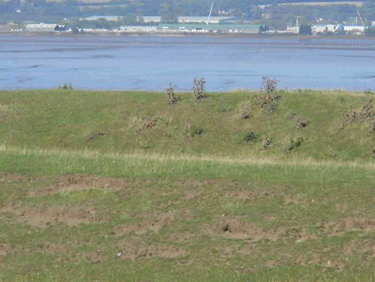

Figure 1: Examples of variability in grass cover along the Humber Estuary
1.1.2.4 Rapid, non-intrusive geophysical methods for dike assessment
The Humber Estuary was used to both demonstrate technology and investigate problematic areas of embankment. The review of geophysics methods and their applicability (WP3.2.1) highlighted the need and value of using different approaches and technologies for different levels of levee assessment. One of these approaches - a rapid assessment method using GMS (dipole electromagnetic profiling, multi-electrode resistance method) was applied to survey a number of embankment locations within the Humber Estuary. The locations chosen represented
- A tidal (coastal, hence saltwater) embankment
- A fluvial (hence freshwater) embankment
- A composite embankment, strengthened with concrete
- An embankment noted as suffering seepage during extreme events
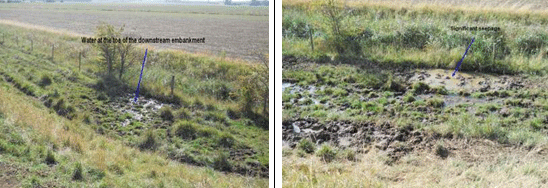
Figure 2: Embankments suffering seepage problems along the Humber Estuary
1.1.3 Combination of information sources for dike diagnosis in a GIS
Research investigating how the use of additional data can improve the accuracy of performance assessment for flood embankments considered a range of different approaches. The Humber Estuary was used to provide example embankment profiles and soil types for analysis of performance, taking into consideration features and data that are common to the area and most likely readily available within the Environment Agency inspection process.
In England and Wales, system risk analyses are now being undertaken to support flood risk management, and asset management. The analysis approach used applies the source-pathway-receptor concept and considers the full range of load conditions at any flood defence, the performance of the flood defence over this range of conditions, the ways in which it might fail (represented via fragility curves) and the subsequent risks associated with failure of each and every defence length through an analysis of potential inundation and flood impacts. The flood risk associated with each combination of potential defence loading and failure is attributed back to the defence length in question, allowing asset managers to easily identify which defence lengths pose the greatest flood risk and hence to prioritise maintenance spending.
Examples of how additional data could be used to improve fragility curve representation for levees in the Humber Estuary were undertaken. These included consideration of:
- Visual inspection data – animals
- Visual inspection data – grass quality
- Remote sensing data – presence of trees, roots etc.
- Historic problems – infilling burrows
- Historic planform – river meanders
- Weather / rainfall – soil saturation
- Surface geology – soil quality
Pilot specific lessons learnt
The main function of the Humber Estuary pilot was to provide practical examples of levee management and performance issues to support the various research actions aimed at improving knowledge on the specific performance related areas.
1.2.1 Internal and surface erosion
The analysis of soil samples showed that the soil a clayey soil with low erodibility. However, despite this, the Humber site clearly has sections of embankment that show signs of seepage during high load conditions. In these cases it is therefore likely to be as a result of some form of structure transition, including the presence of old field drainage systems under the embankments. In the particular cases investigated, the seepage was not severe and does not yet warrant an intrusive investigation.
1.2.2 Structure transitions
The Humber Estuary clearly contains a wide variety of structure transitions, and the satellite photos helped in the process of developing the typology. What was particularly interesting with this action was the detail that could be seen simply by using freely available images on Microsoft bird’s eye view. For this area of the UK, the satellite images gave sufficient resolution to study the flood defences (and hence potentially identify problem areas).
1.2.3 Performance of grass cover
Despite the Environment Agency not being aware of any serious problems, the site visit demonstrated a range of different grass conditions, with pathways along the embankment crests being worn free of grass. This reflects the normal range of conditions found on many flood defences. The research into grass performance demonstrated a number of issues relating to current guidance on predicting grass cover, and how use of the existing guidance for system risk analysis (as has been done for the Humber Estuary). In particular, use of existing guidance (CIRIA Report 116) for system risk analysis (rather than design) will over predict the rate of grass failure and hence flood risk from the embankments
1.2.4 Rapid, non-intrusive geophysical methods for dike assessment
The geophysics were undertaken on a variety of embankments, including fluvial (freshwater), coastal (saltwater) and coastal composite (concrete revetment). The analyses clearly showed that both salt and freshwater intrusion within the embankment allowed defects to be detected. The reinforced concrete revetment caused significant interference and hence demonstrated that use of this type of geophysics was not appropriate for those conditions. In site specific terms, the assessments provided the asset managers with a picture of the internal conditions of these levees, providing an example of how they might use this technology as part of their routine asset management.
1.2.5 Combination of information sources for dike diagnosis in a GIS
The examples used for this research action showed how different processes which might occur along these levees would affect the levee performance and hence the overall system flood risk. This provided examples of how future flood risk analysis might be enhanced.
Issues remaining and/or revealed
For the Humber Estuary, the FloodProBE research (under WP3) highlighted a number of issues and methods that might be used to help with the Estuary asset management and flood risk management process. The main issues identified included:
- Use of TN71 grass performance curves instead of CIRIA 116 curves for system risk analysis. Use of CIRIA 116 will lead to overly pessimistic prediction of levee failure
- Transitions pose weak points in flood defence systems and should be considered as individual points for analysis. A typology of transitions now exists which can be used to help assess risks from transitions at a site or river system
- Use of additional data – including rapid geophysics – offers a way of improving the performance assessment of flood defences for the estuary
Links to associated studies
Sites within the Humber estuary were selected for FloodProBE to take advantage of being able to set the localised FloodProBE studies within the context of wider strategic studies being carried out across the whole estuary.
These whole-estuary studies were / are supported by parallel UK-funded research programmes (Flood Risk Management Research Consortium 2 - FRMRC2; FLOODsite into Practice; Modelling and Decision Support Framework 2 - MDSF2). The studies involve carrying out a Risk Assessment for Strategic Planning (RASP) flood systems analysis study for the whole estuary to obtain an overall picture of the residual floodplain risk and the contribution to this from individual assets. In addition to this present day view, and following the logic set down in Tasks 14 and 18 of the FLOODsite project, future flood risk across was explored for two well-defined management strategies for the existing defences over a 100 year timeframe.
In addition to these initiatives, studies associated with the EU UrbanFlood project (www.urbanflood.eu) were also undertaken in the nearby town of Boston, following a review of opportunities within the Humber Estuary area.